
 Written by
 Hepatitis B is one of the most widespread viral infections in Nigeria, with national surveys consistently showing infection rates well above the global average. Despite how common it is, many Nigerians remain unclear about how the virus actually spreads from person to person. This gap in understanding is part of the reason transmission continues largely unchecked in many communities. Knowing the real routes of transmission is the first step toward reducing new infections and protecting families.
This article explains, in plain terms, how hepatitis B spreads in Nigeria, the everyday situations that carry hidden risk, and what can be done to break the chain of transmission.
Understanding the Virus Behind the Infection
Hepatitis B is caused by the hepatitis B virus (HBV), which attacks the liver. Unlike some illnesses that spread through air or casual contact, HBV is a blood-borne virus. This means it travels from one person to another primarily through infected blood and certain body fluids, not through sharing food, hugging, or being in the same room as an infected person.
Because the virus can survive outside the body for a period of time and because an infected person can carry it for years without symptoms, transmission often happens unknowingly, through ordinary daily activities rather than dramatic events.
Mother-to-Child Transmission
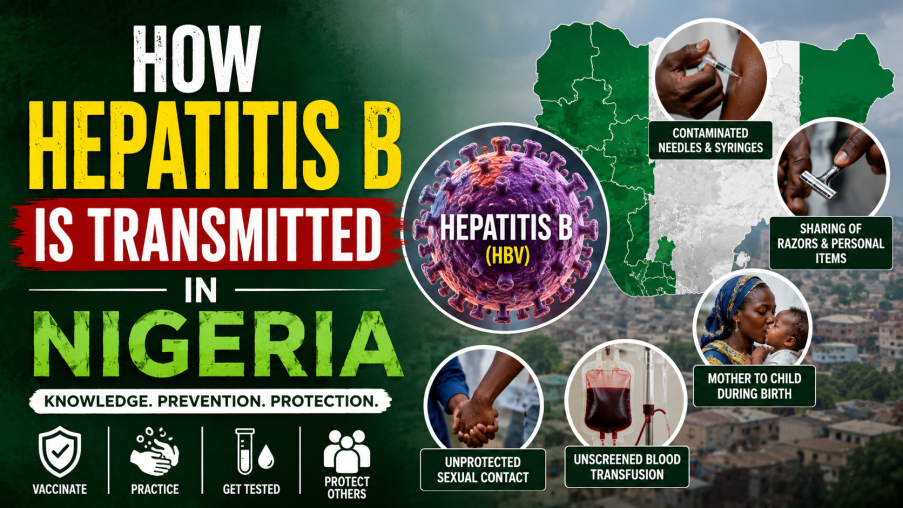
In Nigeria, transmission from an infected mother to her baby during childbirth is considered one of the leading routes of infection. When a pregnant woman carries the virus, especially with high viral activity, the risk of passing it to her baby during delivery can be substantial. Babies infected this way are far more likely to develop chronic hepatitis B that persists into adulthood, compared with adults who contract the virus later in life.
A major challenge is that routine hepatitis B screening is not yet a standard part of antenatal care across all Nigerian hospitals and clinics. This means many pregnant women are never tested, and infections pass to their children without anyone realizing it until much later. Where hepatitis B immunoglobulin and timely vaccination of the newborn are available, the risk of transmission can be greatly reduced, but access to these interventions is still inconsistent in many parts of the country.
Unsafe Medical and Cosmetic Practices
Reused or poorly sterilized sharp instruments remain a significant transmission route. This includes:
- Needles and syringes reused in informal or poorly regulated healthcare settings
- Tattoo and piercing tools that are not properly sterilized between clients
- Local barbing and shaving tools, including razors shared at barbershops
- Traditional scarification or circumcision instruments used across multiple individuals without sterilization
- Dental tools in settings with poor infection control practices
In many Nigerian communities, these practices are part of everyday life, which makes the risk easy to overlook. A single contaminated blade or needle can transmit the virus from one person to several others over time.
Unscreened Blood and Blood Products
Receiving blood that has not been properly screened for hepatitis B is another route of transmission. While Nigeria has made progress in strengthening blood screening protocols at major hospitals, gaps still exist, particularly in emergency situations, smaller facilities, or informal blood donation arrangements where rigorous testing may be skipped. People who receive frequent transfusions, such as those with chronic illnesses, face a higher cumulative risk if screening standards are not consistently applied.
Sexual Transmission
Hepatitis B can also spread through unprotected sexual contact with an infected partner. The virus is present in blood and certain body fluids, making it transmissible during intimate contact without barrier protection. Couples who are unaware of each other’s hepatitis B status are at risk, especially in long-term relationships where regular screening is rarely prioritized. Studies among Nigerian couples have found cases where one partner carries the virus while the other does not, underscoring the importance of joint testing rather than assuming a partner’s status.
Sharing Personal Items
Certain everyday household items can carry trace amounts of blood invisible to the naked eye. Sharing these items with an infected person creates a transmission risk, including:
- Toothbrushes, which can cause minor gum bleeding
- Razors and clippers
- Nail-cutting tools
- Earrings or piercing jewelry used before full healing
Research conducted in Nigerian communities has specifically linked communal toothbrush use to higher rates of hepatitis B infection, highlighting how seemingly harmless household habits can quietly contribute to the spread of the virus.
Occupational and Household Exposure
Healthcare workers, traditional birth attendants, and caregivers who regularly come into contact with blood or open wounds without adequate protective equipment face elevated exposure risk. Within households, caregivers tending to wounds, cuts, or nosebleeds without gloves can also be exposed, particularly when these incidents happen frequently over time.
What Hepatitis B Does Not Spread Through
It’s worth clarifying common misconceptions, since misinformation can fuel both unnecessary fear and unsafe complacency. Hepatitis B does not spread through:
- Sharing meals or eating from the same plate
- Casual contact such as handshakes or hugs
- Coughing or sneezing
- Using the same toilet seat
- Mosquito bites
Understanding these distinctions helps reduce stigma against people living with hepatitis B, many of whom face social isolation due to misplaced fears about how the virus spreads.
Breaking the Chain of Transmission
Reducing hepatitis B transmission in Nigeria depends on a combination of public awareness and practical action. Steps that make a meaningful difference include:
- Vaccinating infants as part of routine immunization, ideally starting at birth
- Screening pregnant women during antenatal visits and providing appropriate prophylaxis for exposed newborns
- Avoiding the sharing of sharp personal items like razors and toothbrushes
- Insisting on sterilized equipment for tattoos, piercings, and traditional procedures
- Practicing safe sex, including consistent condom use, especially when a partner’s status is unknown
- Supporting proper blood screening before transfusions wherever possible
- Getting tested as a couple rather than assuming shared safety
Final Thoughts
Hepatitis B continues to spread across Nigeria largely through routes that are preventable: unsterilized instruments, unscreened blood, mother-to-child transmission, and the sharing of personal items that carry trace blood. Because the virus often causes no symptoms for years, many people unknowingly pass it on through everyday situations. Greater awareness of these transmission pathways, paired with wider access to vaccination and screening, offers the clearest path toward reducing new infections and protecting future generations.
If you believe you may have been exposed to hepatitis B, or if you are pregnant and have not been screened, consult a qualified healthcare provider for testing and guidance.
This article is for general informational purposes only and does not substitute professional medical advice, diagnosis, or treatment. Always consult a qualified healthcare provider regarding any medical condition.