
 Written by
 Hepatitis B remains one of the most pressing public health concerns in Nigeria today. The country carries one of the heaviest hepatitis B burdens in sub-Saharan Africa, with national surveys placing infection rates among adults in the double digits in several studies, and millions of Nigerians currently living with the virus, many without knowing it. Because the disease often develops quietly before causing visible harm, understanding its symptoms is one of the simplest ways to protect yourself and your family.
This article breaks down what hepatitis B is, how it shows up in the body, and what steps you can take if you suspect you or someone close to you may be infected.
What Is Hepatitis B?
Hepatitis B is a viral infection that attacks the liver. It spreads through contact with infected blood or body fluids, which in Nigeria commonly happens through unscreened blood transfusions, sharing of sharp objects such as razors or needles, unsterilized tattoo or piercing equipment, unprotected sexual contact, and transmission from an infected mother to her baby during childbirth. The virus can also spread through traditional practices that involve skin-piercing instruments, which remain common in many communities.
The infection can be either acute, meaning it resolves on its own within a few months, or chronic, meaning it persists for years and gradually damages the liver. Many adults who contract hepatitis B clear the virus naturally, but infants and young children infected at birth are far more likely to develop the long-term, chronic form.
Why Symptoms Are Easy to Miss
One of the most dangerous features of hepatitis B is how silent it can be. A large proportion of infected people, especially in the early stages, feel completely normal. This is part of the reason the infection spreads so widely across Nigerian communities without detection. By the time symptoms become noticeable, the liver may already be under significant strain.
This silent nature is precisely why screening and vaccination matter as much as recognizing symptoms.
Early Symptoms of Hepatitis B
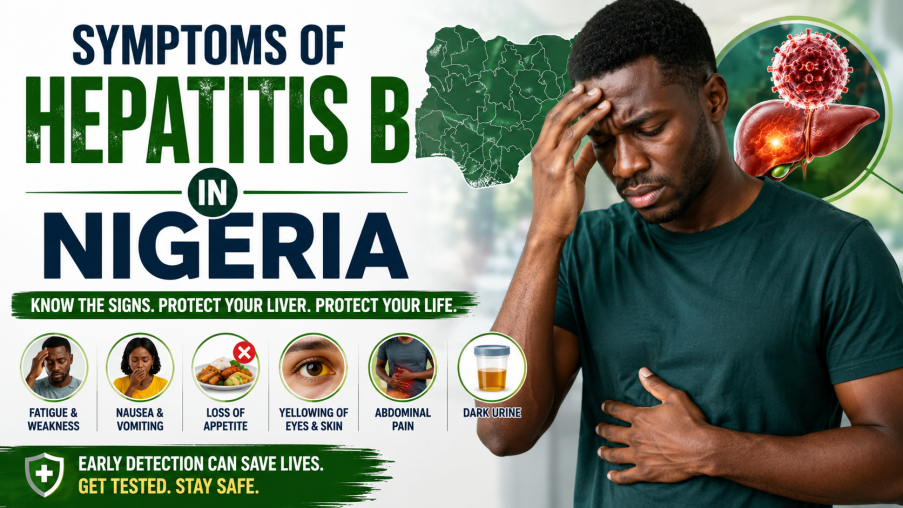
When symptoms do appear, they typically show up weeks after exposure to the virus and can resemble a general feeling of being unwell. Common early signs include:
- Persistent fatigue and weakness that doesn’t improve with rest
- Low-grade fever
- Loss of appetite, often making food seem unappealing
- Nausea and occasional vomiting
- Mild abdominal discomfort, particularly in the upper right side where the liver sits
- Joint pain, which some people mistake for malaria or typhoid, two illnesses commonly diagnosed in Nigeria
Because these symptoms overlap so closely with malaria, typhoid fever, and other common tropical illnesses, hepatitis B is frequently misdiagnosed or overlooked entirely at the early stage.
Advanced Symptoms to Watch For
As the infection progresses, more specific signs related to liver function begin to emerge. These include:
- Jaundice, a yellowing of the eyes and skin caused by the liver’s reduced ability to process bilirubin
- Dark-colored urine
- Pale or clay-colored stool
- Persistent itching of the skin
- Swelling in the abdomen or legs, which can indicate fluid buildup from liver strain
- Easy bruising or bleeding, since a damaged liver struggles to produce clotting proteins
These advanced symptoms are warning signs that the liver is under serious stress and require urgent medical attention.
Chronic Hepatitis B and Long-Term Risk
For people who develop chronic hepatitis B, symptoms may not appear for years, sometimes decades. During this silent period, the virus can continue to damage liver tissue gradually. Over time, this raises the risk of:
- Liver cirrhosis, where healthy liver tissue is replaced by scar tissue
- Liver failure
- Liver cancer (hepatocellular carcinoma), one of the most serious long-term complications
This is why medical experts stress that regular liver function checks and hepatitis B screening matter even for people who feel healthy, particularly in regions like Nigeria where the virus is widespread.
Symptoms in Babies and Children
Mother-to-child transmission is a significant route of infection in Nigeria. Infected infants rarely show obvious symptoms at birth, which makes maternal screening during pregnancy especially important. Children who carry the virus from infancy are at a much higher risk of developing chronic infection later in life compared to adults who are infected as grown-ups.
When to See a Doctor
Anyone experiencing unexplained fatigue, yellowing of the eyes or skin, dark urine, or persistent abdominal discomfort should seek medical attention promptly. A simple blood test can detect hepatitis B surface antigen, the marker used to confirm infection. Early diagnosis allows for proper monitoring and, where necessary, antiviral treatment that can slow liver damage significantly.
Pregnant women in particular are encouraged to get tested during antenatal visits, since timely intervention can prevent the virus from passing to their babies.
Prevention Remains the Best Protection
While recognizing symptoms is valuable, prevention offers the strongest defense against hepatitis B. Practical steps include:
- Getting vaccinated. The hepatitis B vaccine is safe, effective, and included in Nigeria’s routine immunization schedule for infants.
- Avoiding sharing of sharp objects such as razors, needles, or nail clippers.
- Ensuring blood transfusions are properly screened.
- Using sterilized equipment for tattoos, piercings, and traditional procedures.
- Practicing safe sexual habits, including consistent condom use.
- Getting tested, especially if you fall into a higher-risk group or are planning a pregnancy.
Final Thoughts
Hepatitis B continues to affect a substantial number of Nigerians, often without obvious warning signs until the disease has progressed. Recognizing symptoms such as persistent fatigue, jaundice, abdominal discomfort, and dark urine can prompt earlier testing and treatment, which significantly improves long-term outcomes. Combined with vaccination and safer health practices, awareness remains one of the most powerful tools available in reducing the impact of hepatitis B across Nigerian communities.
If you suspect you may have been exposed to hepatitis B or notice any of the symptoms described above, consult a qualified healthcare provider for testing and guidance rather than relying on self-diagnosis.
Note: This article is for general informational purposes only and does not substitute professional medical advice, diagnosis, or treatment. Always consult a qualified healthcare provider regarding any medical condition.